Keep the Island Singing.

Keep the Island Singing

Puerto Rico's nights have grown quieter. Softer. More hesitant. As if the lack of rain had turned down the volume on the Island's natural symphony — the coquí's song, and the calls of the other species that come alive when it rains. 

Here's what's actually happening. Parts of the Island, mostly the south, are in extreme drought. In the northeast, seven municipalities are on a rotating water schedule while the reservoir that serves metropolitan San Juan recovers. Three months ago, Puerto Rico had no drought at all anywhere on the Island. It arrived fast. 

Puerto Rico remains open to travelers. Services can vary by property and location, so the best first step is simple: check with your hotel, rental host, or tour operator before you arrive. 

Visitors did not cause these conditions. But you’re a guest here while the Island works through them, and guests notice things. What follows is what can help — starting with what helps you. 

What to expect while you're here

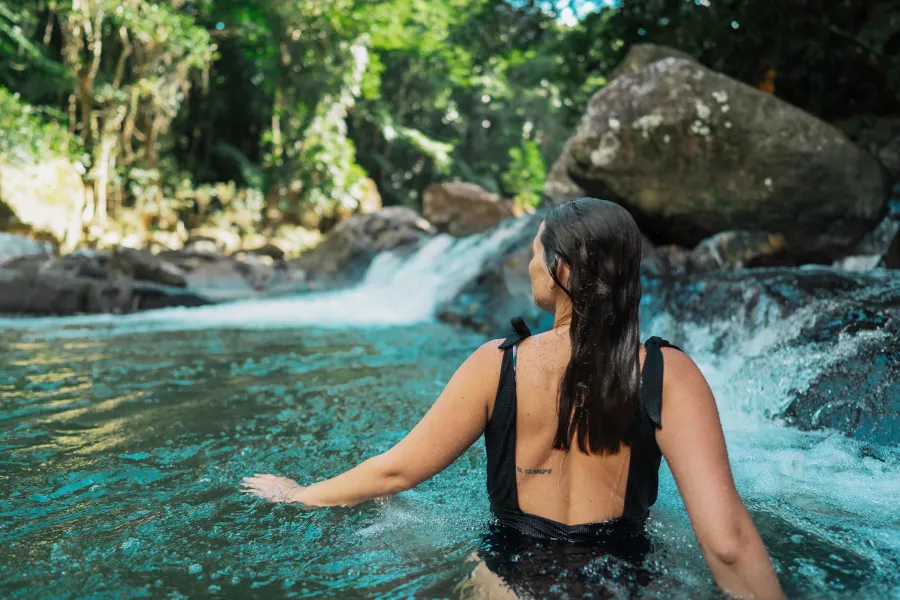
A traveler pauses in a clear natural pool beside a small waterfall in Puerto Rico’s tropical forest.

Enjoy every drop. Protect every song. Take the pledge to care for Puerto Rico’s water and help keep the Island singing.

The pledge 

Tonight, I'll listen for the coquí. 

I will treat Puerto Rico's water with care, not fear. 

I will take a shorter shower when I can. I will reuse my towel. I will speak up when I hear a drip. 

I will follow local water updates and respect any changes to my plans. 

Not because anyone asked me to give anything up. Because I'd like the song to still be here the next time I come back.

Go deeper and explore The Green Path, Puerto Rico’s sustainable travel program

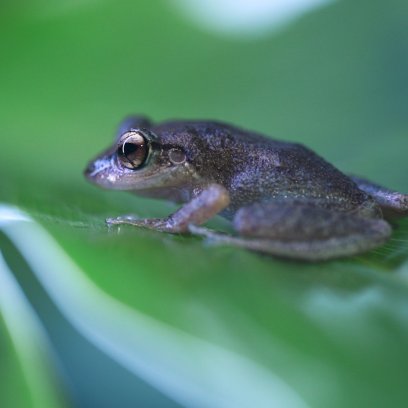
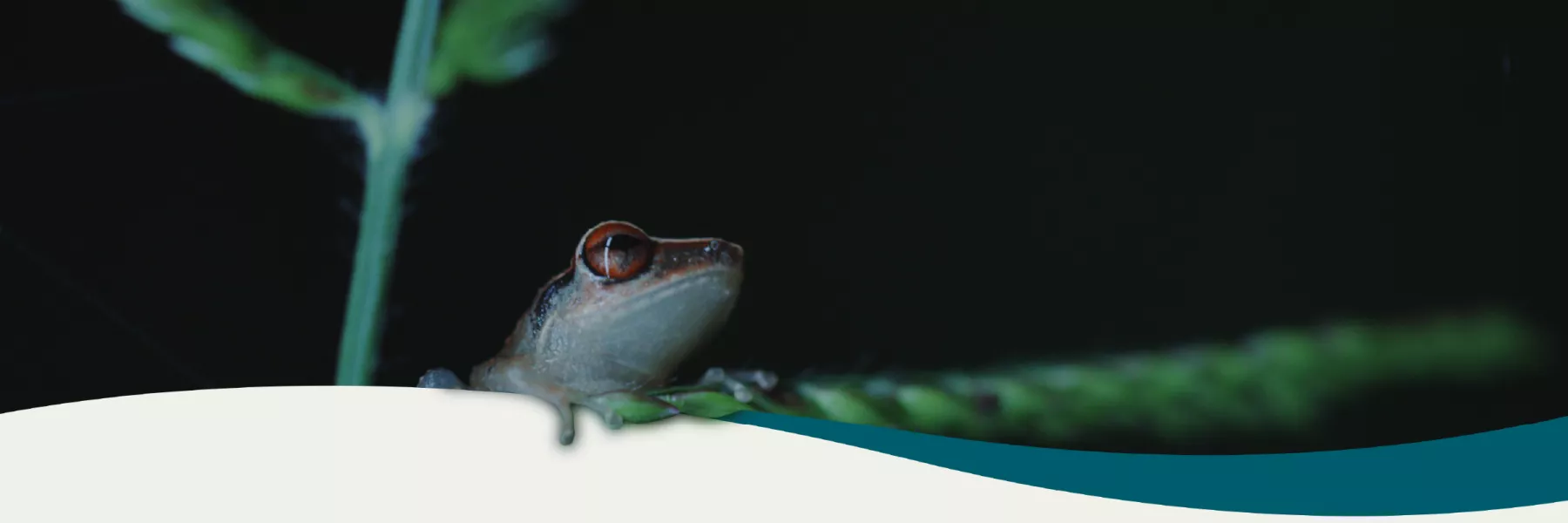
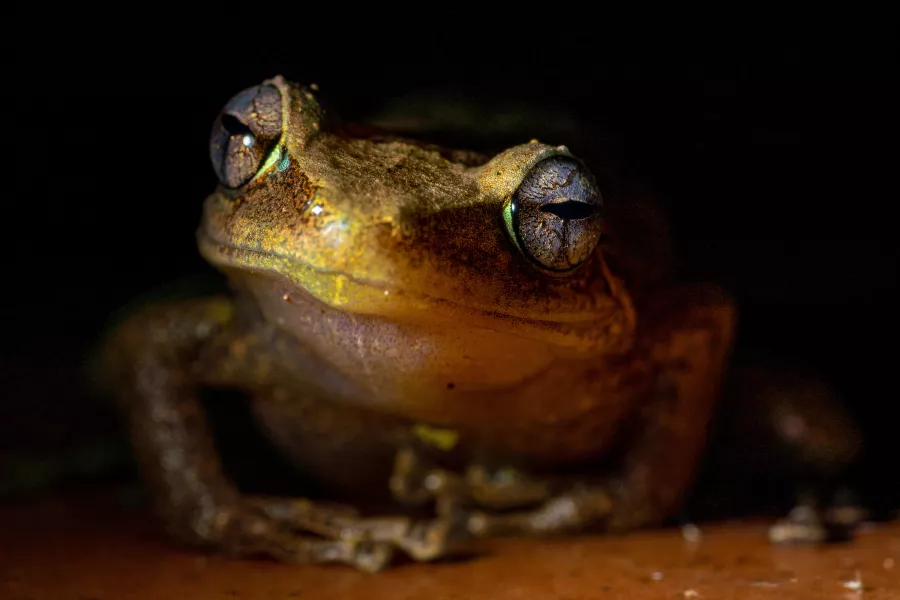
Close-up of a Puerto Rican coquí frog at night, illuminated against a dark background.

When night falls, listen closely. The coquí’s call reminds us that caring for every drop helps keep the Island singing.

Why the Coquí 

He’s been telling a story about place and moisture all along. 

There's a moment many visitors to Puerto Rico remember — not something they see, but something they hear. As the light fades, a small voice rises from the undergrowth. Co-quí. Co-quí. Then another. Then hundreds, until the whole night is an orchestra. 

It's easy to hear it as ambiance. It's closer to a conversation — one the coquí has been having with this Island for a very long time. 

The science behind the sound 

The common coquí is a small frog native to Puerto Rico. Like other amphibians, it absorbs water through its skin and also uses its skin to breathe. That skin needs to stay moist. 

Its familiar call has two notes, and researchers have found that they do different work. The co warns other males to stay away. The quí helps attract a female. A territory map and a love song, sung at once. The male is the singer. 

The common coquí does not need a pond to reproduce. The female lays her eggs on land in a damp, protected place. The male guards the nest and helps keep the eggs hydrated as they develop. Tiny froglets hatch without a free-swimming tadpole stage. 

No pond. No stream. Just a sheltered nest, moist air, and a father staying close until the eggs hatch. It is a small life shaped by the moisture around it. 

Where he lives — and it isn't only El Yunque 

Coquíes live across the whole Island, including the southern municipalities now in the deepest drought. El Yunque holds most of the species, but the chorus is an Island-wide sound, and so is what's happening to it. 

Why the water matters everywhere 

Forests cover a little over a third of Puerto Rico and produce close to half of its water. El Yunque alone — barely one percent of the Island's land — sends drinking water to about 780,000 people. The reservoir behind the current rationing sits on the Río Grande de Loíza, which begins 3,500 feet up in the Sierra de Cayey and supplies half the drinking water for metropolitan San Juan. 

Different mountains. Different rivers. One Island. Water connects them. 

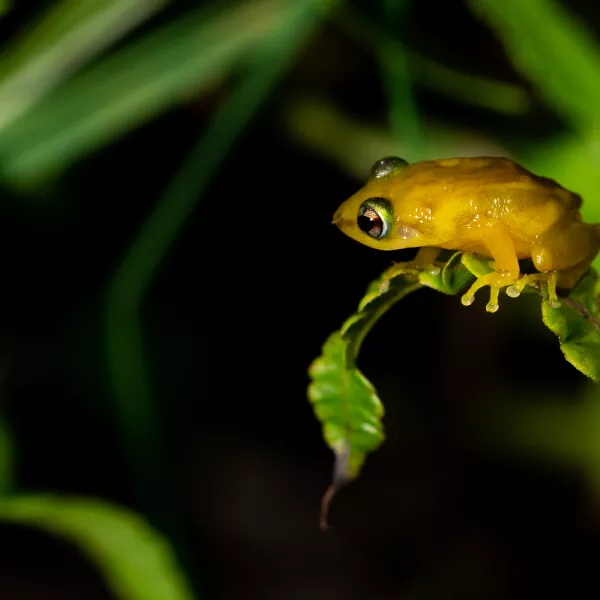
A coqui frog, a native species of amphibian in Puerto Rico.

The beloved coquí may be small, but its iconic song echoes across Puerto Rico, filling the night with a sound that instantly feels like home.

Higher humidity increases calling activity — males call more frequently and for longer periods under moist conditions. [...] Dry air delays calling activity; coquíes typically wait until later at night, when dew formation increases moisture levels, before beginning their chorus.

Laura Fidalgo-De Souza, Biological Sciences Technician (Wildlife), Supervisory, El Yunque National Forest / R8, Ecosystem Team

The story we tell about it 

Long before anyone had a word for humidity, the Taínos held the mountains of this rainforest to be sacred — home to gods and spirits. It isn't hard to see why the coquí's song got woven into that. A frog that thrives only when the Island is thriving, loudest exactly when the rain has done its work. 

That's not folklore built on myth. That's a culture noticing, centuries before a research paper could confirm it, that the small voice in the dark was telling the truth about how the Island was doing. 

Scientists read it as data. Puerto Ricans have always read it as something closer to a heartbeat. 

What it means right now 

Right now, on certain nights, the chorus is thinner than it should be. That isn't a metaphor. It's the same biology that has always been true, responding to the same conditions it has always responded to. The Island is dry, and the coquí is saying so the only way he knows how. 

He isn't asking anything of you. He's just singing what's true. 

But if you're listening — actually listening — then a shorter shower, a reused towel, a word to the front desk about a dripping tap becomes a small, real way of answering back. 

For visitors, the call can become a favorite memory. For many Puerto Ricans, it sounds like home. 

That is why the coquí belongs in this story. He is not an alarm. He is a small reminder that water, place, and life are tied together.
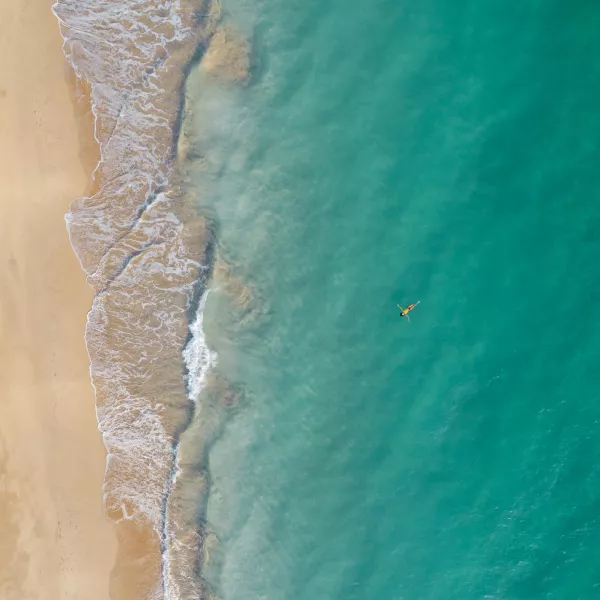
Aerial view of a swimmer floating in clear turquoise water beside a sandy beach in Puerto Rico.

Let the water carry you—and care for every drop. Mindful choices help keep Puerto Rico beautiful and the Island singing.

What to expect while you're here 

Seven municipalities in the northeast — San Juan, Carolina, Juncos, Gurabo, Trujillo Alto, Canóvanas, and Loíza — are on a rotating schedule of roughly 48 hours with water and 48 hours without, while Lago Carraízo recovers. Elsewhere on the Island, service is largely normal. In the south, where the drought is most severe, restrictions have focused on agricultural irrigation. 

Many hotels and rentals have cisterns or roof tanks and run normally straight through the off-cycle. If yours does, you may not notice anything at all. 

Keep the Island Singing.

Before you arrive 

Questions worth asking before you pack

  • Call your hotel or rental host and ask whether the property has backup water storage — a cistern or roof tank. Hosts here are used to the question. Asking it means you'll travel easier. 
  • Ask what to expect during the off-cycle — pools, spas, laundry service. 
  • Check whether your exact location is included in the current AAA plan. Do not rely only on the municipality name. 
  • Bring a reusable water bottle and follow current local guidance before filling it. 
  • If a plan needs to shift, shift the plan — not the trip. Ask about another nearby municipality or experience.
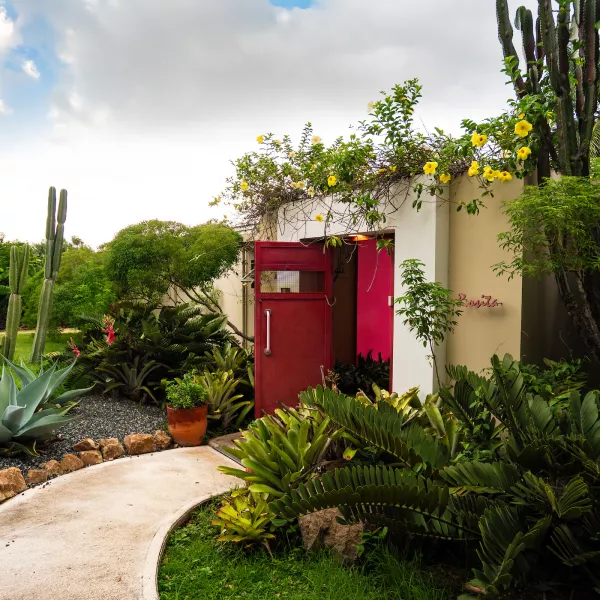
The entrance to 4 Casitas, a sustainable bed-and-breakfast surrounded by native plants and cacti in Cabo Rojo, Puerto Rico.

Stay somewhere that cares for the Island, too. 4 Casitas pairs a peaceful Cabo Rojo escape with a more sustainable way to experience Puerto Rico.

In your room 

Small things, done together 

  • Take a shower instead of a bath. Keep it a little shorter. It is one small way to help keep the song going. 
  • Turn off the tap while brushing your teeth, washing your face, or shaving. 
  • If you hear a drip or a running toilet, tell the front desk or your host. You’re the one who heard it, and a quick report can stop water waste. 
  • Reuse towels and linens when the property offers that choice. 
  • Keep pool and beach rinses brief. 
  • At restaurants, take only the water you plan to drink and ask for more when you need it. 
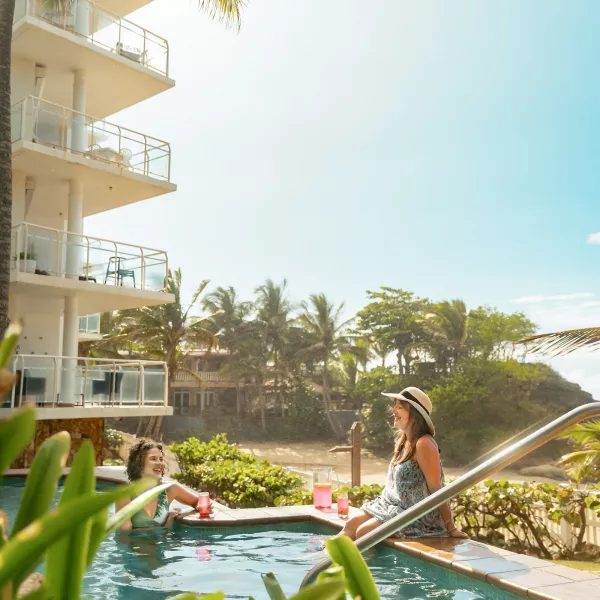
Two guests relax by the pool at a beachfront short-term rental on Puerto Rico’s west coast.

Stay responsibly in Rincón. Every drop keeps the Island singing.

If you're staying in a rental 

You're staying at someone's home. Treat the water the way they do. 

  • Ask your host how the backup water system works. Do not adjust pumps or valves unless your host shows you how. 
  • Run the dishwasher only when it is full. Scrape dishes instead of rinsing each one first. 
  • Wash full loads of clothes. 
  • Skip the garbage disposal when you can. Bag or compost food scraps instead. 
  • Avoid watering lawns or gardens and skip washing the car during dry weather. 
  • Thaw food in the refrigerator, not under a running tap. 
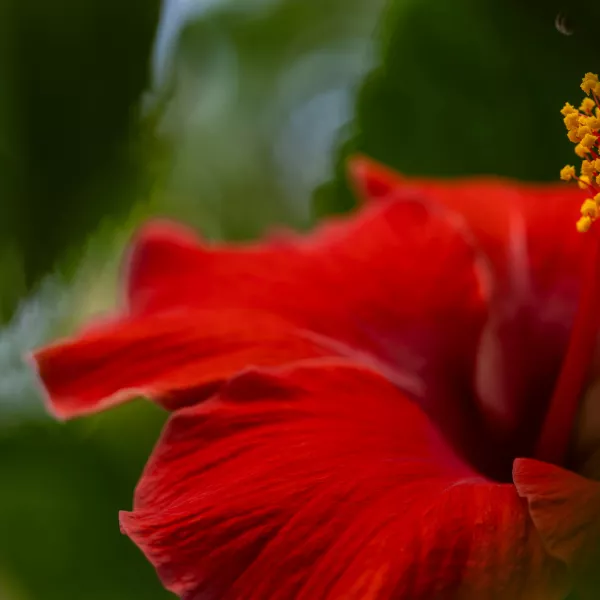
Close-up of a red maga flower, Puerto Rico’s national flower, in bloom against a soft green background.

Puerto Rico’s maga flower reminds us that every bloom begins with water. Care for each drop and help keep the Island singing.

Choosing a place that's part of the song 

Simple signs that a property is taking action on water conservation

  • Look for WaterSense-labeled faucets, showerheads, and toilets. 
  • Ask whether the property follows EPA WaterSense practices for hotels, such as checking for leaks, tracking water use, and choosing efficient fixtures. 
  • Look for towel and linen reuse, quick leak repairs, smart pool care, and landscaping that needs less water. 

Browse lodging that's already been vetted: Conscious Stays on The Green Path

Frequently Asked Questions

Is the whole Island affected?

No. As of the August 4 Drought Monitor, about a fifth of Puerto Rico had no drought at all, and the northwest and north-central improved over the previous four weeks. Conditions are hardest in the south; the water rationing is in seven northeastern municipalities, for reasons that have more to do with reservoir supply than with local rainfall. 

Will my hotel have water?

Most likely, yes. Many properties have cisterns or roof tanks. Call and ask — it's a normal question here. 

Should I still come?

Yes. Tourism matters more during a difficult stretch, not less. 

Is the tap water safe to drink?

Puerto Rico's public water systems follow federal drinking-water rules. During a service break, follow current advice from the AAA and your property. For customers in the affected Carraízo plan, the AAA has advised boiling water for at least three minutes after service returns before using it for drinking. 

Are beaches, pools, waterfalls, and tours open?

Broadly yes. Some river and natural-pool experiences may be adjusted where water levels are low; operators will offer alternatives. 

Are visitors making the drought worse?

No. This is a rainfall shortage on top of aging infrastructure — more than half the Island's treated water is lost to leaking pipes before it reaches a tap. Guest water use is a small share of the total. What visitors do still matters, but as solidarity, not as the fix. 

How long will this last?

No one knows yet. NOAA's August 7 report showed a greater than 70% chance of much less rain than normal from August through October 2026. The outlook and the water schedule can change, so check official updates. 

Is the coquí's song a reliable sign of the Island's water balance?

Not universally. Vocalization patterns vary by species and local conditions. But research shows the common coquí (Eleutherodactylus coqui) increases its calling during warm, wet conditions — so for that species, a fuller chorus can reflect short-term moisture availability, even if it isn't a scientific measure of the whole Island's water supply.

Do coquís live all over Puerto Rico, or mainly in the rainforest?

All over. The common coquí is found island-wide, from the coast to the mountains. A few species have narrower ranges — like the Coquí Guajón and the Coquí Llanero — and El Yunque alone is home to 13 of the Island's 17 coquí species.

Once the rain returns, how quickly does the coquí chorus come back?

Right away. Coquís are well adapted to short dry spells, and calling activity picks back up as soon as moisture returns. The bigger, longer-term question — for coquís and the Island alike — is what happens if droughts like this one become more frequent.